Everyone might not be able to pronounce the name but we have all at one point in time somehow sampled it:
‘King of cheeses’ – The Parmigiano Reggiano -.
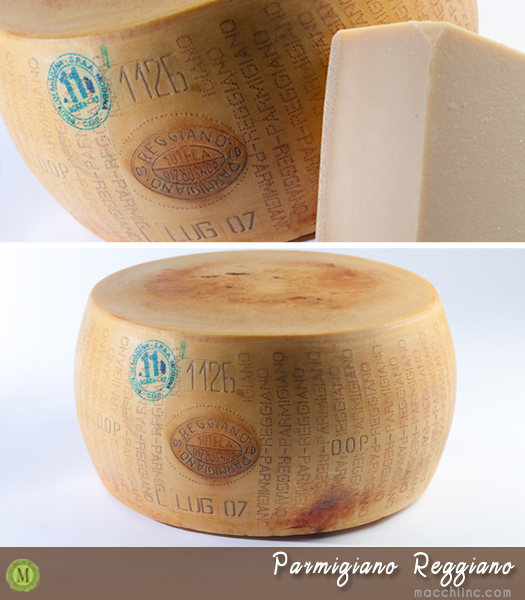
- Parmigianno Reggiano D.O.P. – Picture taken by Montreal photographer Vadim Daniel
Parmigiano Reggiano
Just like all of the other products I have mentioned so far, the secret always lies within the local vegetation and climat,
in this case for the Parmigiano Reggiano it is the:
- natural feed
- high quality milk ( partially whole and partially skimmed )
- no additives except for salt
- the long process of aging
- natural fermenting agents in the milk
The Parmigiano Reggiano has for at least eight centuries been made in the exactly same way, in the same places, with the same appearance. Even the production has remained the same using: milk, rennet, fire and heart.
How it’s made…
Parmigiano Reggiano is made from raw cow’s milk, milk is pumped into copper-lined vats (copper heats and cools quickly), calf rennet is added to allow cheese to curdle. Temperature is raised and curd is left to settle. Curd is then placed in molds that will produce wheels that are 45 kilos (100 lbs) each. Cheese is placed into stainless steel round forms to retain it’s classical shape. After a couple of days cheese gets imprinted several times with the Parmigiano Reggiano name, the number of the plant and the year of production. The ‘wheels’ are then placed in a brine bath to absorb salt for 20-25 days. Cheeses are then placed on wooden shelves, cleaned and turned once/week for 12 months. At 12 months the consorzio of Parmigiano Reggiano inspects each cheese to make sure it fulfills all of it’s requirements. After this procedure each plant can then choose how much longer they would like to age the cheese. The aging process is anywhere from 18, 22 to 30 months.
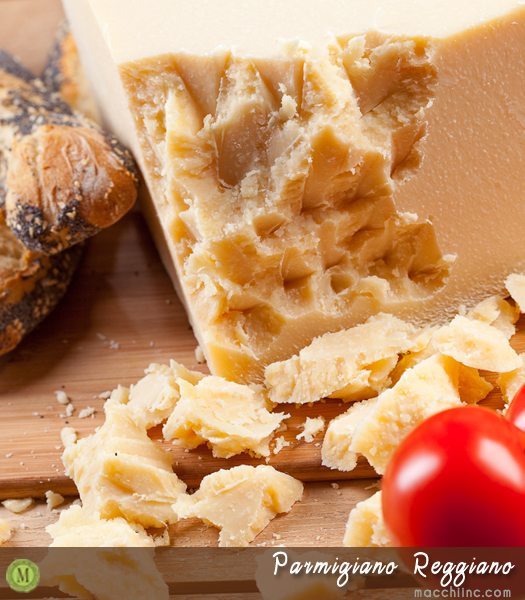
For more about the production I found this beautifully made video that I would recommend you all to see by clicking here!
In the next post I will speak about the Grana Padano, the differences between the Parmigiano Reggiano and the Grana Padano and some tips and tricks.
Later!

